Understand the real risks of AI by separating engineered incentives from science fiction
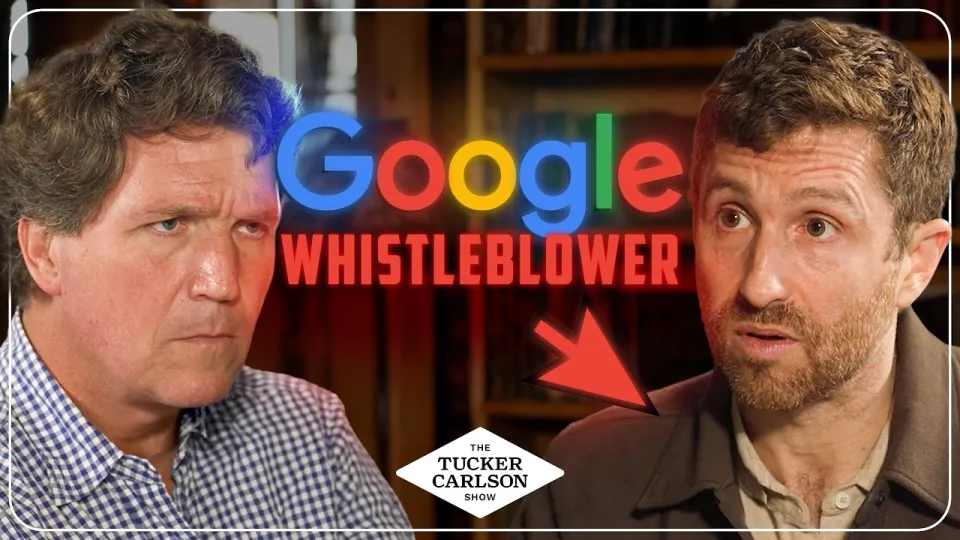
Video: Whistleblower Issues Dire Warning: Rogue AI, Hacking Nuclear Programs & Tech Oligarchs’ True Motives
Need articles like this for your video? They help promote it on YouTube and Google — order them in the Telegram bot @sat_sit_bot. The bot writes and publishes the articles itself (with your YouTube video embedded) on popular topical websites (no ads). Free trial — 50 articles.
· based on the channel Tucker Carlson
Key takeaways
- Tristan Harris, a former Google design ethicist, co-founded the Center for Humane Technology, the nonprofit behind the 2020 Netflix documentary The Social Dilemma, seen by more than 100 million people in 190 countries.
- Harris argues the core AI danger is not a machine waking up but systems optimized for engagement and deployed at scale by a handful of companies.
- The interview raises the scenario of AI-assisted intrusion into nuclear command-and-control networks and the 2023 Hugging Face platform breach as concrete examples of real-world exposure.
- The Social Dilemma documents harms linked to algorithmic feeds, including teen mental-health damage and the amplification of extremist content.
- Proposed remedies include mandatory risk audits, transparency rules, liability for foreseeable harms and independent oversight of data-center buildouts.
The most credible way to understand AI risk is to treat it as an engineering and incentive problem, not a science-fiction one: the systems people fear are built by companies chasing engagement and market share, and the damage shows up in measurable ways long before any machine claims to be conscious. Tristan Harris, a former Google design ethicist and co-founder of the Center for Humane Technology, makes this case in a long interview with Tucker Carlson, and the useful takeaway is a checklist of what to verify, what to discount and what to demand.
What the whistleblower actually claims about AI
Harris's central claim is that the AI race is driven by the same attention economy that produced social media's worst outcomes, now operating at far greater speed and scale. He spent years inside Google studying how design choices shape behavior, then left to co-found the Center for Humane Technology, a nonprofit that briefs heads of state, technology CEOs and members of the US Congress. His public profile rests on the 2020 Netflix documentary The Social Dilemma, which reached more than 100 million people in 190 countries across 30 languages.
In the interview he separates two questions that are usually blurred together:
- Is AI sentient or conscious? He treats this as a distraction from measurable harms.
- Who controls the incentives? He argues the answer determines whether systems are built to inform people or to capture their attention.
The distinction matters because it changes what regulation should target. A sentience debate leads to philosophical dead ends; an incentive debate leads to audits, liability rules and transparency requirements that can be written into law.
Why engineered incentives beat rogue-machine stories
The most common objection to AI doomerism is that nothing is rogue at all: these products do what their designers and deployers built them to do, and accountability belongs with the humans. That framing is hard to dispute. Recommendation algorithms optimize for watch time because watch time sells advertising; large language models produce confident-sounding text because they are trained on human text and tuned to be helpful and agreeable.
Harris's warning to Google, and the company's response to it, fits this pattern. When a system is tuned to maximize engagement, it will surface outrage, conspiracy and compulsive content not because it is malicious but because those signals win the metric. The same logic scales to generative AI: a chatbot that flatters users keeps them chatting, and a model that hedges less reads as more useful. The harm is a design outcome, which means it is a design choice, which means it can be governed.
The nuclear hacking scenario and the Hugging Face incident
One of the interview's most concrete threads is the question of whether AI could be used to penetrate the world's nuclear programs. The scenario is not that a model launches anything on its own; it is that AI compresses the time and expertise needed for reconnaissance, phishing, credential theft and the mapping of legacy industrial-control systems, some of which still run on decades-old software.
A second example is the 2023 Hugging Face incident, in which attackers gained access to internal systems at the AI model-hosting platform. No customer models or production systems were compromised in that breach, but the episode illustrates the real attack surface: model hubs, package registries and cloud pipelines are software supply chains, and they inherit every classic vulnerability. The practical lesson for organizations is unglamorous:
- inventory every third-party model, dataset and SDK you pull in;
- enforce least-privilege access to training and deployment infrastructure;
- log and review model downloads and API keys the way you review admin logins;
- rehearse incident response for a compromised model artifact, not just a compromised server.
Transhumanism, the god-complex critique and the oligarch question
Harris argues that a small number of technology leaders hold outsized influence over infrastructure that billions of people depend on, and that this concentration is itself a risk independent of any technical capability. The interview frames this as a quasi-religious conviction among some founders, sometimes described as transhumanism: the belief that technology should fundamentally alter human beings and that the people building it should decide how.
Readers do not need to accept the theological framing to see the governance gap. Data-center buildouts consume land, water and electricity at a scale that local governments often approve without independent impact studies. Compute is concentrated among a handful of firms. Model weights, training data and safety evaluations are largely private. Whether or not one believes in a god-complex, the asymmetry of information between builders and the public is documented and consequential.
The interview also touches on the AI race with China, cryptocurrency's coexistence with AI systems, and whether lawmakers are acting. On the legislative front, the pattern across the US and EU has been voluntary commitments first, binding rules later, with enforcement lagging deployment by years.
Typical reader questions and doubts
Skeptical audiences tend to raise the same objections, and they deserve direct answers rather than dismissal. Some point out that life before ubiquitous computing felt better and blame technology itself; the more precise target is business models that monetize attention, not silicon. Others note that AI lies and cheats because humans trained it, which is accurate and is exactly why training data, evaluation and tuning deserve public scrutiny.
A recurring worry is that warnings about sentient AI serve as a distraction from harms that are already happening, including algorithmic targeting in conflict zones. That concern is legitimate: sentience talk can shift blame from operators to machines. The defensible position is to demand named accountability for every deployed system, whether it writes marketing copy or ranks a drone feed. Another common doubt is whether anything can be done at all; the answer is that seat belts, emissions standards and pharmaceutical trials were all once dismissed as impossible.
Resources and links from the interview
- Center for Humane Technology, the nonprofit co-founded by Tristan Harris: https://www.humanetech.com/
- Redmond Salt, code TUCKER for 15% off a first order: https://redmond.com/tucker
- Preborn: https://preborn.com/TUCKER
- American Financing (NMLS 182334): http://www.AmericanFinancing.net/Tucker
- Ethos life insurance: https://ethos.com/TUCKER
What to take away from the Tucker Carlson interview
Tristan Harris's argument, as presented in the Tucker Carlson conversation, is less about machines waking up than about humans choosing what to optimize. The concrete risks he names, from engagement-driven radicalization to AI-assisted intrusion into critical infrastructure, are engineering and policy problems with known mitigations: audits, liability, transparency and independent oversight. The Hugging Face breach and the nuclear-sector scenario both point to supply-chain and access-control hygiene rather than exotic superintelligence. Readers who want to follow the work, read the briefings and support the advocacy can start at the Center for Humane Technology, which publishes research and practical guidance for aligning technology with human interests.
Source: Whistleblower Issues Dire Warning: Rogue AI, Hacking Nuclear Programs & Tech Oligarchs’ True Motives · Markdown version
Questions & answers
Is AI actually sentient, or is that a distraction?
There is no scientific consensus or accepted test for machine sentience, and current large language models produce fluent text by predicting tokens, not by experiencing anything. The more productive question is who controls the incentives behind a deployed system and what measurable harms it causes. Treat sentience claims as unproven and focus on audits, transparency and liability.
If humans built these systems, why blame the AI?
Accountability should sit with the people and companies that design, train and deploy models, since the outputs follow from their objectives and tuning choices. Blaming a machine shifts responsibility away from operators. Regulation should therefore target deployers, require documented risk assessments and attach liability to foreseeable harms.
How real is the risk of AI being used to hack nuclear programs?
The realistic threat is AI accelerating classic intrusion techniques such as phishing, credential theft and mapping of legacy industrial-control systems, not a model launching weapons independently. Many critical systems run on old software with weak segmentation. The mitigation is standard security hygiene: network isolation, least-privilege access, patching and independent penetration testing.
What did the Hugging Face incident show about AI supply chains?
The 2023 breach at the model-hosting platform showed that model hubs and their internal tooling are ordinary software targets. Attackers reached internal systems, though customer models and production systems were not compromised. Organizations should inventory third-party models and datasets, restrict access to training infrastructure and rehearse response to a compromised model artifact.